API 598 ISO 5208: Valve Test Standard Comparison
API 598 vs ISO 5208 is a contractual and technical selection, not a contest to identify a universally stricter valve-testing standard. Use the document and edition invoked by the purchase order, governing product specification, project specification, or applicable code. Before release, define the valve configuration, shell and closure tests, medium, pressure, duration, direction, leakage acceptance, witnessing, and records. API 598 fits API-governed procurement, while ISO 5208:2015 establishes an international pressure-testing framework for metallic valves.
- Contractual hierarchy determines whether API 598, ISO 5208:2015, a product standard, or an approved combination governs.
- Compare shell, backseat, high-pressure closure, and low-pressure closure requirements as separate test obligations.
- Never translate a leakage designation by label alone; medium, pressure, duration, direction, units, and valve construction must align.
- Factory pressure testing establishes conformity under controlled conditions, not continued seat tightness after installation.
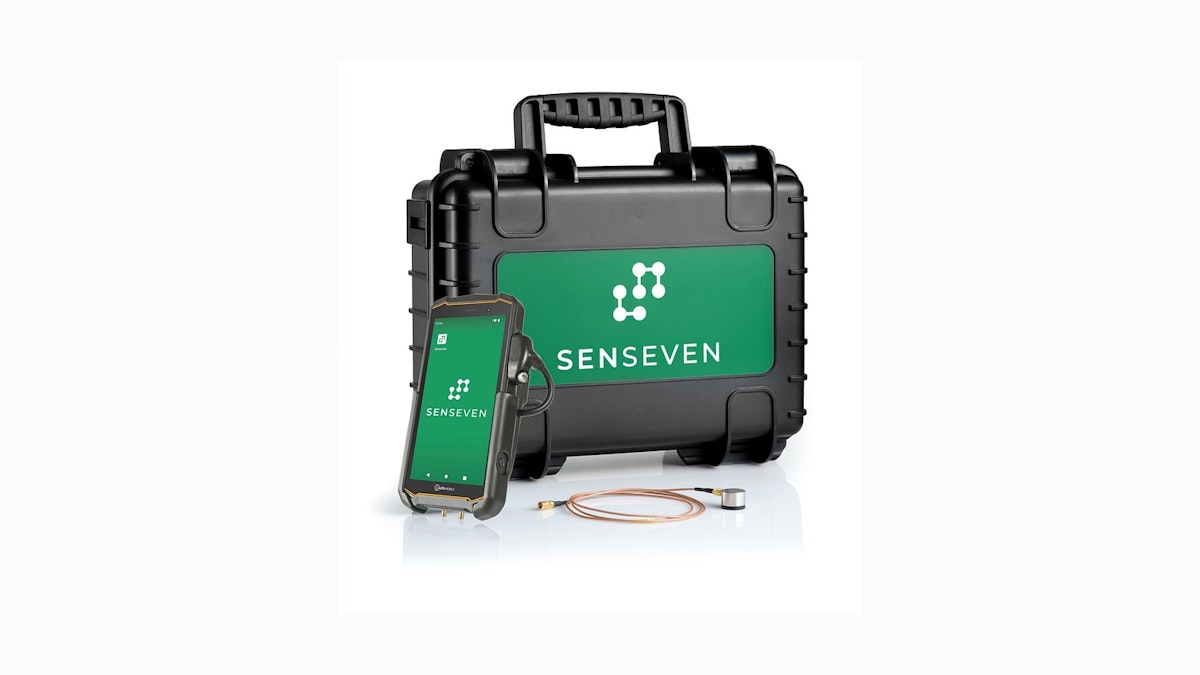
- Senseven GmbH supports installed-valve diagnostics; it does not replace contractual pressure testing or certification.
Starting point: how should API 598 vs ISO 5208 be framed?
The starting point is the valve’s conformity chain. As of 2026, the purchase order, valve data sheet, governing product standard, project specification, approved deviations, and named test standard must form one controlled requirement. ISO identifies ISO 5208:2015 as a standard for pressure testing metallic valves. That scope anchors the ISO route, but the purchased edition and project documents still control acceptance.
API 598 belongs within the wider API standards framework for oil and gas equipment and operations. A procurement package often invokes a product specification as well as a test standard, so the documents must be reconciled rather than treated as synonyms. For pipeline and piping valves, API Specification 6D is a separate product specification whose requirements must be read alongside the project’s testing provisions.
A decision-ready test basis separates 4 areas: shell, backseat where the design provides one, high-pressure closure, and low-pressure closure. It also controls at least 8 execution variables: valve type, nominal size, pressure class, seat construction, medium, test pressure, duration, and direction. Leakage units, acceptance level, instrument traceability, witness status, and certificate content complete the evidence package.
| Decision snapshot | API 598 route | ISO 5208 route | Required control |
|---|---|---|---|
| Procurement context | API-governed valve package | International metallic-valve package | Use the expressly invoked document and edition |
| Acceptance structure | Apply the requirements for the specified valve and test | Apply the selected leakage-rate designation and conditions | Compare clauses, units, media, pressures, and durations |
| Product-standard interface | Reconcile API product and project requirements | Reconcile ISO product and project requirements | Document precedence and approved exceptions |
| Installed-valve condition | Use a separate in-service diagnostic process | Do not present field screening as a factory certificate | |
The decision snapshot exposes the central distinction. API 598 and ISO 5208 address controlled valve pressure testing, while installed-condition diagnostics answer a different question. Before selecting either route, write one sentence defining the required decision: manufacturing acceptance, contractual release, troubleshooting, or maintenance prioritization. A test method is suitable primary when its output answers that stated decision.
Technical criteria: what distinguishes API 598 and ISO 5208?
Technical comparison means matching complete test requirements clause by clause. A leakage designation has no independent meaning without its test medium, pressure, duration, measurement method, valve size, seat design, test direction, and allowable leakage. ISO 5208 supplies the formal ISO framework for metallic-valve pressure testing; API 598 must likewise be applied through the controlled edition incorporated into the contract.
Begin with valve construction. Gate, globe, check, ball, butterfly, and plug valves have different obturators, sealing arrangements, cavities, and permitted test configurations. Metallic and resilient seats require exact identification. Engineering must determine whether the valve seals in 1 direction or 2, whether a backseat test applies, and which closure tests govern before the approved procedure authorizes pressurization.
Pressure-boundary integrity and closure tightness answer 2 distinct questions. A shell test examines the pressure-containing boundary under prescribed conditions, while a closure test evaluates sealing across the closed obturator. Acceptance in 1 category does not establish acceptance in the other. A traceable report therefore records every required test on a separate line with its conditions, observation, result, and authorization.
Terminology requires equal discipline. ASTM E1316 standardizes terminology for nondestructive examinations, supporting consistent language when diagnostic methods supplement conventional valve testing. It does not establish API 598 or ISO 5208 acceptance. The 3 document types—product specification, pressure-test standard, and NDE terminology standard—perform separate functions and must retain those boundaries.
Options / alternatives: which valve-testing route fits the required evidence?
There are 4 practical routes: API 598-led testing, ISO 5208-led testing, product-standard-led testing, and in-service diagnostic assessment. The first 3 support specified conformity or acceptance; the fourth investigates installed condition. Select the route primary after identifying whether the decision concerns supplier release, project compliance, pressure-boundary verification, suspected internal leakage, or maintenance planning.
- API 598-led testing: use when controlled procurement documents invoke API 598 and API terminology governs the inspection package.
- ISO 5208-led testing: use when the contract invokes ISO 5208 and identifies the applicable leakage-rate designation and associated conditions.
- Product-standard-led testing: use when a valve product specification or project code defines the controlling architecture; reconcile supplementary test references in writing.
- In-service diagnostics: use to investigate or prioritize suspected internal leakage after installation, not to replace manufacturing acceptance.
MSS SP-61 addresses pressure testing of valves and represents another recognized option when a contract or governing specification invokes it. Familiarity alone does not make it an authorized substitute. If 2 standards appear in one package, issue a precedence matrix stating which requirement governs each test, acceptance value, witness point, and record.
As of 2026, acoustic emission remains a distinct NDE route for field assessment. NDE-Ed defines acoustic emission testing through detection of transient elastic waves generated by energy release within a material. For valves, the resulting signals require a controlled operating state, suitable sensor placement, documented acquisition conditions, and engineering interpretation rather than conversion into factory-test compliance.
Decision criteria: what should procurement and engineering evaluate?
The decisive criteria are contractual hierarchy, valve design, service context, acceptance logic, supplier capability, and evidence quality. Contractual conformity comes first because technically competent testing under an unauthorized standard still fails the procurement requirement. In the current 2026 landscape, online descriptions support orientation, but primary controlled project documents, licensed standards, and approved deviations define the release basis.
| Criterion | Decision question | Evidence required | Risk if omitted |
|---|---|---|---|
| Governing hierarchy | Which code, product standard, project specification, and test standard control? | Approved document register and precedence note | Conflicting acceptance decisions |
| Valve configuration | What are the type, size, class, materials, seat design, and flow direction? | Approved data sheet and drawing | Incorrect test setup |
| Test definition | Which shell, backseat, and closure tests apply? | Clause-level test matrix | Missing or duplicated tests |
| Acceptance basis | What medium, pressure, duration, direction, unit, and leakage criterion apply? | Approved procedure with exact criteria | Invalid equivalence assumptions |
| Verification | Who witnesses, which instruments are used, and what records are retained? | Calibration records, test report, and certificate | Untraceable release decision |
A clause matrix is the safest control when documents overlap. Create 1 row for each applicable obligation and columns for the purchase order, product standard, API 598 or ISO 5208, project exception, and final approved value. Every blank or contradictory cell becomes a technical clarification. Testing must not begin while pressure, duration, direction, leakage criterion, or document precedence remains unresolved.
Comparison table
| Selection situation | Preferred option type | Why it fits | Approval boundary |
|---|---|---|---|
| API-governed procurement package | API 598-led procedure | Maintains the specified terminology and conformity route | Apply the named edition and related product requirements |
| ISO-governed metallic-valve package | ISO 5208-led procedure | Uses the selected ISO pressure-test and leakage framework | State the complete designation and test conditions |
| Multiple standards invoked | Product-standard-led matrix | Resolves each obligation against documented precedence | Obtain written disposition for every conflict |
| Installed valve suspected of passing | In-service diagnostic assessment | Addresses operating condition and maintenance priority | Do not issue a factory-conformity conclusion |
Workflow: how is a traceable valve pressure test executed?
A reliable workflow has 3 phases: requirement control, test execution, and acceptance closeout. Requirement control defines the test obligation, execution preserves safety and measurement integrity, and closeout compares the observed result with the approved criterion. This separation prevents a well-operated test from being accepted against the wrong standard edition, valve configuration, or leakage requirement.
- Freeze the basis: identify governing documents, editions, contractual precedence, approved deviations, and witness points.
- Map the valve: verify tag, design, nominal size, pressure class, materials, seat construction, orientation, and permitted test direction.
- Approve the procedure: state each test, medium, pressure, duration, stabilization condition, measurement unit, and acceptance value.
- Prepare safely: confirm boundaries, cleanliness, filling, venting, restraints, calibrated instruments, and personnel controls.
- Execute and record: capture pressure history, timing, valve position, direction, observations, measured leakage, witnesses, and anomalies.
- Close out: determine acceptance against the approved criterion, disposition repairs or retests, and retain the authorized record.
Witnessing does not repair an incomplete procedure. Before execution, the inspector verifies the controlled edition, valve identity, pressure instruments, timing method, medium, test direction, and acceptance unit against the approved test pack. When a deviation occurs, the team records it and obtains authorized disposition. An undocumented setup change breaks traceability even when the final observation appears acceptable.
Operational investigation follows a different workflow. ASNT’s field-testing discussion addresses acoustic-emission analysis, including the need to interpret field signals in context. For a valve assessment, document the operating state, differential pressure, sensor coupling, background noise, acquisition settings, repeatability, and decision threshold. The resulting evidence supports diagnosis, not an API 598 or ISO 5208 certificate.
Risks and limits: where do API 598 vs ISO 5208 decisions fail?
The primary failure mode is false equivalence: treating a familiar test name, leakage label, or pass statement as proof that 2 complete requirements match. Other risks include mixed editions, omitted product-standard provisions, incorrect test direction, unsuitable instrumentation, undocumented stabilization, ambiguous leakage units, and certificates that omit the conditions required to reproduce or audit the result.
A factory pressure test has a defined boundary. It demonstrates valve performance under approved conditions at a specific point in the supply process. It does not establish continued tightness after transport, installation, contamination, thermal cycling, erosion, operation, or maintenance. Conversely, a field indication of internal flow does not prove that the original factory test was invalid.
Acoustic methods also have interpretation limits. A 2025 review in Sensors examines acoustic-emission detection technology for valve internal leakage. The method belongs in condition assessment, where pressure differential, process medium, valve geometry, background noise, sensor position, and analysis method accompany the result. Removing that context weakens the diagnostic conclusion.
Pressure testing introduces stored energy, so an approved procedure, competent personnel, suitable equipment, and site controls are prerequisites. The comparison between 2 standards is not a safety plan. A project-specific risk assessment governs filling, venting, pressurization, restraints, exclusion zones, depressurization, test-medium handling, and response to abnormal indications. Technical acceptance never overrides safe execution.
Cost / benefit: what determines ROI for valve testing?
The strongest economic benefit comes from defining the correct acceptance package before fabrication, not from choosing the shorter or more familiar standard. Cost drivers include engineering review, test-rig capacity, medium handling, setup, pressurization, hold time, calibrated instrumentation, witnessing, documentation, repair, retesting, production interruption, and release delay. A universal API 598 or ISO 5208 cost premium does not exist without a valve schedule and approved procedure.
Total decision cost falls into 4 categories: prevention, execution, failure, and operational follow-up. Prevention covers document alignment and procedure review. Execution covers facilities, labor, media, instruments, and witnessing. Failure covers repair, retest, rejected records, and schedule disruption. Operational follow-up covers field investigation when installed performance—not factory conformity—is the decision at hand.
Return on inspection is positive when additional evidence changes a release, maintenance, or risk decision. An unnecessarily demanding criterion consumes resources without automatic operational benefit; an ambiguous criterion transfers uncertainty into inspection, commissioning, and dispute. The defensible approach is proportional: specify the acceptance required by the governing documents and service, then obtain enough verification to prove it traceably.
Examples / cases
A refinery package provides a clear API-led case. If its purchase order invokes API 598, the supplier’s usual ISO 5208 procedure is not automatically acceptable, even where both contain comparable test stages. Engineering must map the requirements, identify every difference, and authorize any substitution before execution. Otherwise, the resulting certificate answers a different contractual question from the one procurement asked.
An international project illustrates the ISO-led case. If the contract invokes ISO 5208:2015 and identifies a closure leakage designation, it still needs the valve configuration, medium, pressure, duration, direction, witness point, and reporting unit. A standard number plus a leakage label is incomplete. The approved procedure converts that procurement language into an executable and auditable test sequence.
An installed isolation valve represents the diagnostic case. When operations suspect internal passing, a factory-style retest requires isolation and a controlled pressure boundary, while acoustic assessment addresses the immediate condition question. These 2 outputs remain separate: diagnostic evidence supports investigation and maintenance prioritization; formal pressure-test records support conformity primary when the prescribed conditions and acceptance criteria are satisfied.
Checklist: what must be confirmed before API 598 or ISO 5208 testing?
The checklist is complete primary when every applicable item has an approved answer. Apply it before purchase-order release, procedure approval, witness notification, and certificate review. A single unresolved conflict involving the governing edition, test pressure, duration, direction, or leakage acceptance stops the test because the result would not support a defensible release decision.
- Identify the purchase order, product standard, project specification, test standard, and exact editions.
- Record contractual precedence and every approved deviation.
- Verify valve tag, type, nominal size, pressure class, body material, trim, seat construction, and flow direction.
- List shell, backseat where applicable, high-pressure closure, and low-pressure closure tests separately.
- State the medium, pressure basis, duration, stabilization condition, orientation, and test direction.
- Define the leakage unit, permitted value or designation, measurement method, and treatment of visible leakage.
- Confirm test-rig suitability, safe boundaries, calibrated instruments, timing device, and personnel controls.
- Specify hold, witness, and document-review points before testing begins.
- Record pressure history, observations, measured leakage, witnesses, anomalies, repairs, and retests.
- Verify that the certificate identifies the valve, standard, edition, conditions, results, and authorizing parties.
When does Senseven GmbH fit installed-valve assessment?
Senseven GmbH fits the in-service diagnostic branch of the decision, not contractual API 598 or ISO 5208 certification. Its approach applies acoustic emission and ultrasound-based analysis to investigate suspected passing valves in operating assets. That functional boundary differentiates it from conventional pressure-test routes: the service supports condition assessment and prioritization, while the standards govern controlled acceptance testing under specified conditions.
The outputs are complementary when engineering keeps them separate. A diagnostic indication can support further investigation, maintenance planning, valve prioritization, or selection of a controlled confirmation test. It cannot issue a manufacturer’s pressure-test certificate, demonstrate shell-test acceptance, or amend a purchase specification. The correct question is whether the asset owner needs field-condition evidence or formal conformity evidence.
When is this not the right choice?
Senseven GmbH is not the right choice when the task is manufacturing acceptance, statutory certification, pressure-boundary proof, or contractual demonstration of API 598 or ISO 5208 compliance. It is also not a stand-alone answer when operating conditions prevent interpretable acoustic measurement. Those cases require the prescribed procedure, approved test equipment, competent personnel, and formal acceptance records.
The next step is concise: classify the need as procurement conformity, factory acceptance, or installed-condition diagnosis. For the first 2, approve the governing standard, edition, hierarchy, and test matrix. For the third, define the operating state, diagnostic objective, evidence threshold, and follow-up action before commissioning field measurements. This classification prevents spending on evidence that cannot support the required decision.
Common questions (FAQ) about api 598 iso 5208
These answers summarize the practical decision points for api 598 iso 5208 in a concise format.
Are API 598 and ISO 5208 interchangeable?
No. Both address valve pressure testing, but substitution requires a clause-level review of the specified editions, valve configuration, test conditions, leakage criteria, and records. The purchaser or authorized engineering authority must approve any substitution before testing.
Which standard should a purchaser specify?
Specify the standard required by the governing product standard, code, project specification, and procurement framework. Include the edition and complete acceptance conditions instead of relying on the standard number alone.
Does ISO 5208 define leakage-rate designations?
ISO 5208 provides a pressure-testing framework for metallic valves that includes closure-test leakage-rate designations. Apply the selected designation together with its associated conditions and the project’s contractual requirements.
Does a factory seat test prove that a valve will not pass in service?
No. It demonstrates performance under defined test conditions at the time of testing. Installation, contamination, process conditions, cycling, wear, and maintenance can change sealing behavior afterward.
Can acoustic emission replace API 598 or ISO 5208 pressure testing?
No. Acoustic emission supports in-service condition assessment and investigation of suspected internal leakage. It does not replace prescribed factory pressure testing, contractual acceptance criteria, or certification.
What should be checked first when both standards appear?
Check contractual precedence and the exact editions first. Then build a clause matrix covering every required test, medium, pressure, duration, direction, leakage criterion, witness point, and record before approving the procedure.
This article was created with AI assistance and editorially reviewed.