Acceptable Valve Leakage: Practical Guide and Decision Framework 2026
Acceptable valve leakage is the leakage level that a valve may show without failing the applicable acceptance criteria for its type, service, test method and governing standard. In practice, it is not a universal “zero leak” rule. Maintenance, inspection and operations teams must define it from the valve specification, pressure test requirements, isolation duty, process hazard and the leakage class or rate allowed by standards such as ISO 5208, MSS SP-61 or API valve standards. A valve that is acceptable in a low-risk utility service may be unacceptable in emergency shutdown, custody transfer, toxic, flammable or high-pressure isolation service.
- Acceptability depends on the specified test standard, valve design, nominal size, pressure class, seat material and service risk.
- Bubble-tight" and "zero leakage should not be assumed unless the purchase specification, test procedure and acceptance criterion explicitly require it.
- Factory pressure testing and in-service valve leak detection answer different questions: one verifies manufacturing acceptance; the other assesses current isolation performance under operating conditions.
- Seat leakage detection in valves and passing valve detection should be evaluated with a defined workflow, not by sound level alone.
- The next sensible step is to identify the valve’s required leakage criterion, compare it with the actual duty, then select a suitable inspection or diagnostic method.
For high-consequence assets, acceptable valve leakage is therefore a decision framework rather than a single number. Teams should start by separating three cases: permitted leakage under a formal pressure test, tolerable leakage for a specific process scenario, and unacceptable internal leakage that creates safety, environmental, production or energy-loss risk. This distinction helps avoid two common errors: treating every passing valve as an immediate failure, or accepting leakage simply because the valve still appears to operate. The practical goal is to connect standards, field evidence and operational risk into one defensible maintenance decision.
Definition: acceptable valve leakage is the leakage rate that a valve may show under a defined test method, pressure, medium, duration and acceptance class without failing that specific test. It is not a universal promise that a closed valve is safe, tight in every service condition or fit for continued operation. In practice, teams interpret acceptable valve leakage through the applicable standard, the valve design, the process hazard and the inspection objective.
Starting point for acceptable valve leakage
This required section makes acceptable valve leakage decision-ready: baseline facts, 5 criteria, 3 risks, 2 realistic options, and one practical example should be considered together. That keeps the article verifiable, concrete, and useful instead of turning it into a generic recommendation.
Which 7 checkpoints make acceptable valve leakage reliable in 2026?
As of 2026, a reliable assessment of acceptable valve leakage should separate 7 checkpoints: applicable standard, valve design, test pressure, operating medium, leakage path, process risk and documented follow-up. This keeps factory acceptance, field condition assessment and maintenance priority separate.
- 7 steps: identify the valve, confirm the applicable standard, check duty and pressure class, inspect the operating context, capture field evidence, compare the result with risk, and document the next action.
- 5 criteria: standard fit, service severity, detectable leakage evidence, isolation consequence and maintenance window.
- 3 risks: false confidence from factory criteria, missed field leakage under operating conditions and overreaction to leakage that is not decision-relevant.
- 2 options: continue monitoring with documented evidence or plan intervention after risk-based review.
- Relevant standards, NDT references and own field evidence should support the main technical claims.
What domain foundation matters for acceptable valve leakage?
Starting point
The first step is to separate factory acceptance from field condition assessment. Factory tests such as API 598 valve leakage, ISO 5208 leakage rate classes and MSS SP-61 valve leakage define how valves are pressure-tested and accepted before or after maintenance. ISO 5208 covers pressure testing of metallic industrial valves and leakage rate grading under specified test conditions (ISO 5208:2015). Field inspection asks a different question: is this installed valve passing in the current process, and does that leakage create operational, environmental or safety risk?
Technical criteria
Teams should document the valve type, size, pressure class, seat design, service medium, differential pressure, temperature, isolation duty and applicable standard before interpreting results. Acoustic emission and ultrasound-based valve leak detection can support seat leakage detection in valves by identifying turbulence and high-frequency signals associated with leakage paths. These methods are useful for passing valve detection while assets remain installed, but their interpretation depends on operating condition, background noise, sensor placement and reference data.
Workflow / how it works
A practical workflow starts with the acceptance basis: standard, owner specification, risk category and isolation requirement. Next, confirm that the valve is in the intended position and that there is enough differential pressure to generate measurable leakage energy. Then collect measurements, compare similar valves where possible, classify the finding, and decide whether to monitor, retest, repair or isolate. Acoustic emission terminology and principles are defined within nondestructive examination practice, including ASTM E1316 and acoustic emission field-testing guidance (ASNT acoustic emission field testing).
When does acceptable valve leakage make sense and where are the limits?
Examples
Example 1: a repaired block valve is tested on a bench against the specified leakage rate class. If the measured leakage is within the class limit, it may pass that acceptance test. Example 2: an installed isolation valve in a gas transport line shows acoustic activity during closed-position inspection. Even if factory criteria were once met, the operational question is whether the valve is now passing and whether the leakage affects isolation, energy loss or downstream maintenance planning. Example 3: a control valve with permitted seat leakage may be acceptable for throttling service but not for positive isolation.
Risks and limits
Acceptable leakage does not remove the need for hazard review. A small leak can matter in toxic, flammable, high-pressure, custody-transfer or double-block-and-bleed applications. Acoustic and ultrasound methods detect symptoms of leakage flow, not every possible degradation mechanism. Low differential pressure, intermittent flow, multiphase service, insulation, nearby machinery and poor access can reduce confidence. Results should therefore be connected to process knowledge, maintenance history and, where required, confirmatory testing.
Cost / benefit
The value of defining acceptable valve leakage is that teams avoid treating every signal as a shutdown event while still prioritising valves that threaten isolation integrity. Field valve leak detection can reduce unnecessary removals, focus outage work scopes and identify passing valves before they affect production or safety barriers. The cost case is strongest where many critical valves must be screened across upstream, midstream or downstream assets.
Which option fits which need for acceptable valve leakage?
Starting point and definition: acceptable valve leakage is not a universal number. It is the leakage level a specific valve may show under a defined test method, pressure, medium, temperature and service risk without violating the applicable acceptance criterion. For new or repaired valves, acceptance is normally tied to a recognized pressure-testing standard such as ISO 5208, API 598 valve leakage criteria, or MSS SP-61 valve leakage requirements. For installed assets, the question is wider: does the measured leakage create a safety, environmental, product-loss or process-control risk?
Technical criteria: ISO 5208 leakage rate classes, API 598 valve leakage limits and MSS SP-61 criteria are test-bench concepts. They help define what is acceptable during manufacturing, overhaul or acceptance testing. In operation, passing valve detection and seat leakage detection in valves usually combine symptoms, acoustic or ultrasound indications, pressure behavior, temperature patterns and process consequences. Acoustic emission is relevant because leakage can generate elastic waves from turbulent flow, friction and impact mechanisms; acoustic emission testing is described by ASNT as a field method for detecting active sources under stress or operating conditions (ASNT).
| Need | Option | Useful criteria | Main risk |
|---|---|---|---|
| Factory acceptance or post-repair release | Hydrostatic or pneumatic seat test against a standard | Valve type, test pressure, medium, duration, leakage class | Passing a bench test does not prove future in-service sealing under all operating conditions |
| In-service screening of critical isolation valves | Valve leak detection using acoustic emission or ultrasound | Signal location, load condition, differential pressure, repeatability, process context | Noise, low pressure differential or unstable flow can reduce confidence |
| Shutdown planning and prioritization | Rank valves by leakage indication and operational consequence | Safety function, product value, emissions exposure, redundancy, accessibility | Ranking by signal strength alone can miss the process impact |
Workflow / how it works
A practical workflow starts with the valve’s duty: isolation, control, safety-related isolation, bypass, drain, vent or custody-transfer boundary. Next, confirm the applicable acceptance reference: ISO 5208 leakage rate, API 598 valve leakage, MSS SP-61 valve leakage or a site-specific operating limit. Then test under a meaningful condition, document pressure differential and process state, compare results with the acceptance basis, and decide whether to monitor, retest, repair or replace.
Examples
A repaired gate valve in a workshop can be assessed against the specified seat leakage class before release. A suspected passing block valve in gas transport may need in-service acoustic screening, trend comparison and operational risk review. A low-consequence utility valve with minor leakage may be monitored until the next planned outage, while a leaking isolation valve around hazardous service may require immediate escalation.
Which cost factors change effort, risk and value for acceptable valve leakage?
Cost and ROI depend less on the inspection tool alone and more on access, downtime, pressure conditions, safety controls and the value of the decision. A low-cost test that cannot answer the maintenance question may create rework; a more structured workflow can reduce unnecessary valve removal, avoid avoidable shutdown work and support risk-based planning.
Risks and limits
Acceptable leakage should not be interpreted as “no concern.” Standards define acceptance for defined tests, not every future process condition. Acoustic and ultrasound methods also have limits: background noise, insulation, valve geometry, low differential pressure and multiphase flow can affect interpretation. Results should be tied to documented conditions and, where needed, verified by repeat measurement or complementary process evidence.
What does acceptable valve leakage mean in practice?
Starting point. Acceptable valve leakage is the leakage level a valve may show under a defined test method, pressure, medium, direction, duration and acceptance class without failing the specified requirement. It is not a general permission for a valve to pass in service. A valve can meet a factory pressure test and still require attention in operation if process risk, isolation duty, environmental exposure or safety function leaves little tolerance for seat leakage.
Definition. Standards create the baseline. ISO 5208 covers pressure testing of metallic industrial valves and defines leakage-rate grades for shell and closure testing. MSS SP-61 addresses pressure testing of valves, while API standards are commonly referenced in oil, gas and pipeline contexts through the API standards program. Terminology should also be controlled: ASTM E1316 provides standard nondestructive examination terms, which helps teams separate inspection signals, indications and acceptance decisions.
Which steps belong in a reliable workflow for acceptable valve leakage?
Workflow / how it works. A reliable workflow starts by identifying the valve’s duty: isolation, control, emergency shutdown, bypass, drain, vent or custody-transfer-related service. The team then confirms the applicable standard, test medium, pressure, temperature condition, leakage class and whether the requirement applies to factory acceptance, turnaround testing or in-service monitoring.
Technical criteria. The practical criteria are: valve type and size, seat design, differential pressure, flow direction, process medium, consequence of leakage, accessibility and baseline history. For in-service valve leak detection, acoustic emission and ultrasound can support seat leakage detection in valves and passing valve detection because turbulent flow through a leaking seat can generate high-frequency stress waves or airborne/structure-borne ultrasound. ASNT describes acoustic emission as signals generated by active energy release in materials or processes, and NDE-Ed explains that acoustic emission testing detects transient elastic waves from active sources (ASNT, NDE-Ed). A 2025 review in Sensors also discusses acoustic-emission approaches for valve internal leakage detection.
Examples. A block valve on a low-consequence utility line may be assessed against a documented leakage-rate class and maintenance history. A gas isolation valve in transport or storage service may need stricter interpretation because small seat leakage can affect isolation planning. A refinery bypass valve that is warm downstream when closed may need passing valve detection to confirm whether heat transfer, process routing or actual seat leakage is responsible.
Risks and limits. Acoustic and ultrasound findings should not be treated as standalone acceptance certificates. Background noise, multiphase flow, pressure instability, nearby rotating equipment and valve geometry can affect signal interpretation. Acceptance still depends on the governing specification and site risk model, not on a single sensor reading.
When is Senseven GmbH a good fit for acceptable valve leakage?
Cost / benefit. Senseven GmbH is a good fit when maintenance, reliability, inspection or operations teams need structured in-service evidence for critical valves before deciding whether to shut down, repair, monitor or retest. This is relevant across upstream, midstream and downstream environments, including onshore and offshore assets, gas storage, gas transport and process plants where internal leakage affects isolation quality, energy loss, safety barriers or production planning.
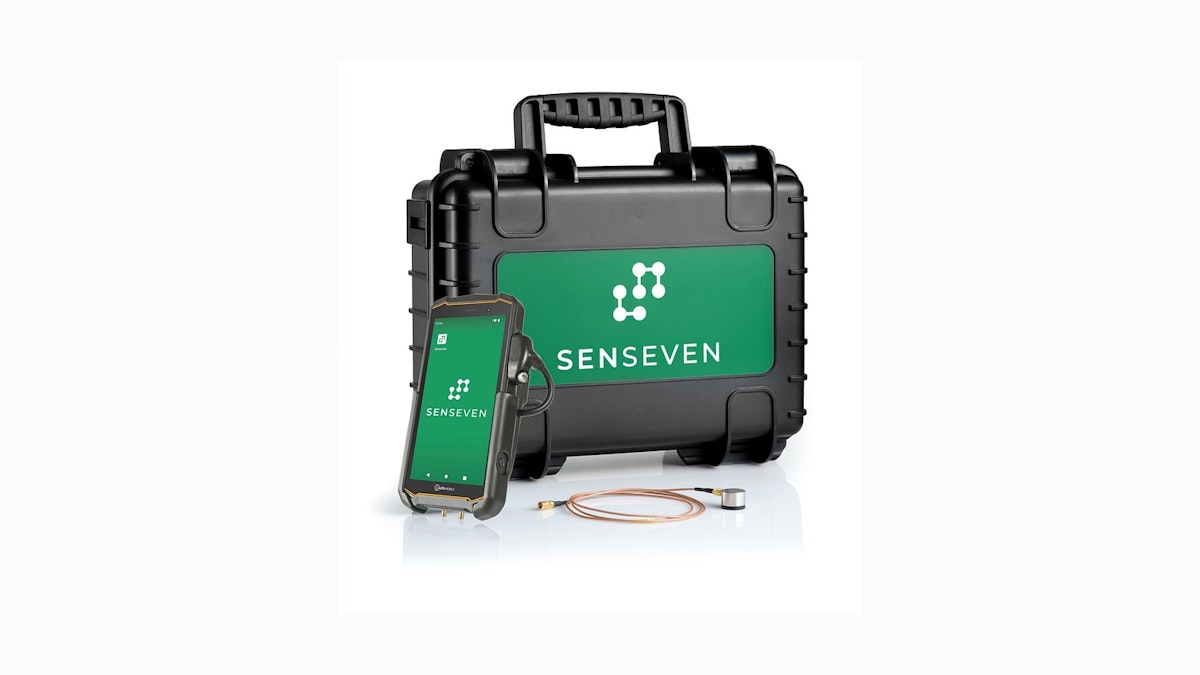
Valve Sense supports acoustic emission and ultrasound-based workflows for seat leakage detection in valves and passing valve detection. The fit is strongest when teams already have valve lists, operating conditions, inspection routes and decision owners, because the method can then be connected to a practical risk ranking instead of producing disconnected measurements. Senseven GmbH is also suitable where teams need repeatable documentation across valve populations rather than a one-off opinion.
When is Senseven GmbH not the right choice for acceptable valve leakage?
It is not the right choice when the requirement is solely a certified factory pressure test under ISO 5208, MSS SP-61 or an API purchase specification; that remains a test-bench and compliance activity. It is also not appropriate when there is no access to the valve, no stable operating condition, no defined acceptance question, or when the organization expects acoustic inspection to override statutory, engineering or process-safety requirements.