
Valve Inspection FAQ – Your Questions About Valve Sense Answered
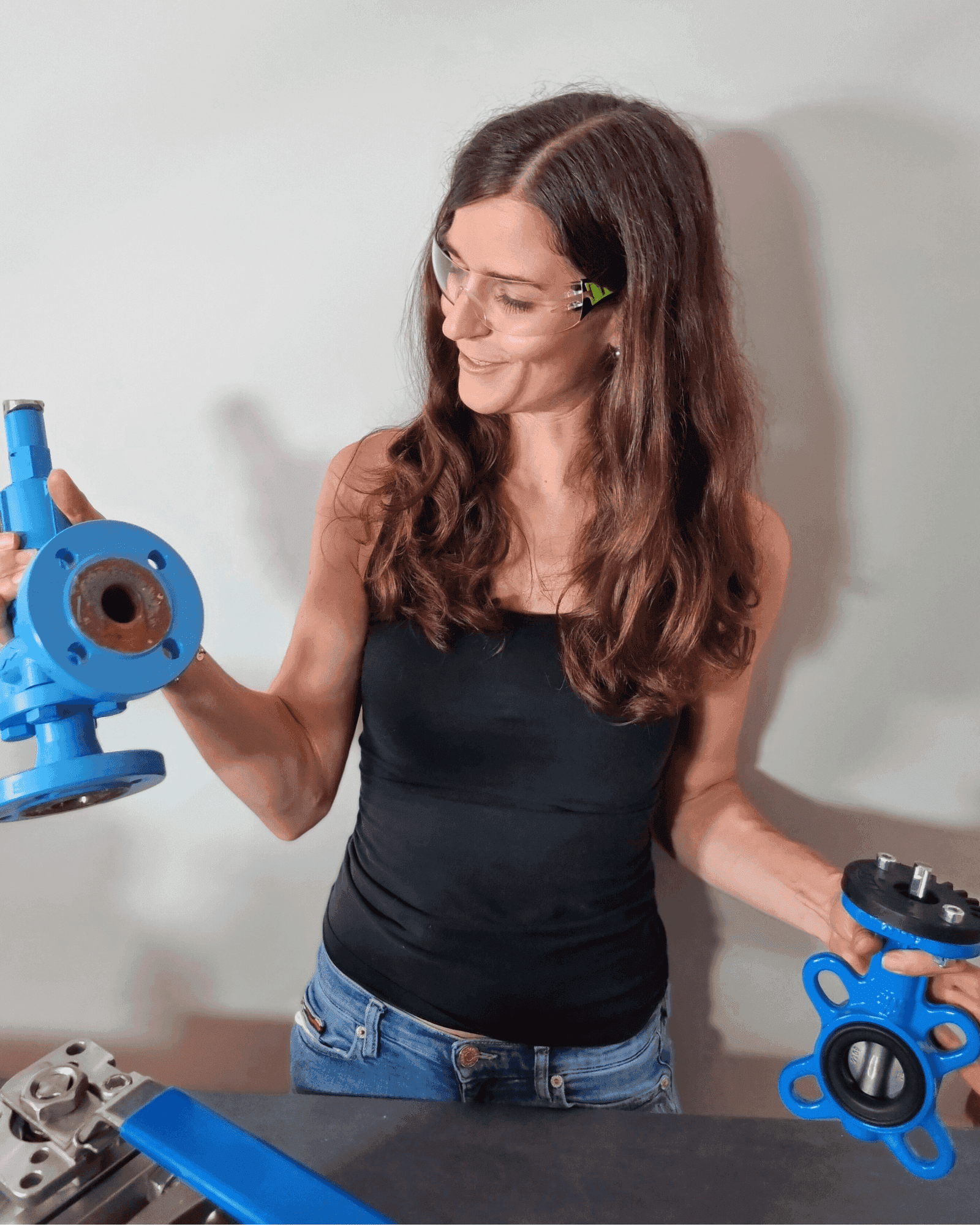
Valve Sense is a complete inspection kit shipped in a rugged transport case. It includes an i.safe MOBILE smartphone (IS540.1 for ATEX Ex zones or IS540.RG for industrial use), acoustic emission sensors, a waveguide for hot and cold surfaces, the Senseven app for leak detection and quantification, and access to the Senseven Backoffice for data storage, automated reporting, and analysis.
Acoustic emission testing (AET) is a non-destructive method that detects high-frequency stress waves generated when a fluid leaks through a closed valve under pressure. Sensors placed on the valve body capture these signals, which the Valve Sense AI analyzes to determine whether a leak is present and estimate its size – without interrupting production.
No. Valve Sense requires the i.safe MOBILE IS540.1 (for ATEX Ex Zone 1/21) or IS540.RG (for non-Ex industrial areas). These devices are certified for hazardous environments and have the processing power required to handle the acoustic emission data in real time. Both are included in the delivery.
Valve Sense works with all on/off, control, and safety valves of any size. For valves larger than DN 100, multiple measurement points on the valve body are required. Small leaks in very large valves may be harder to detect due to the greater distance between the leak source and the sensor.
You need to confirm that the valve is closed and that a pressure differential exists across it. Before starting, you select the medium type and enter the valve size for leak quantification. All other information is optional.
Valve Sense works with virtually all valve materials. The only exceptions are grey cast iron and glass valves, which can dampen acoustic emission signals and make small leaks harder to detect.
Valve Sense is optimized for water, gas, steam, and pressurized air. It also works with other media such as viscous liquids, though the minimum detectable leak size may be larger compared to the optimized media.
Three conditions must be met: (1) the valve must be fully closed, (2) a pressure differential of at least 1 bar must exist across the valve, and (3) insulation must be removed or direct access to the pipe must be possible. The app then guides you through the measurement process.
Yes – high pressure is actually advantageous for Valve Sense. The higher the pressure differential, the stronger the acoustic emission signal generated by the leaking medium. A minimum of 1 bar pressure differential is required.
The minimum detectable leak depends on valve type and size, pressure differential, medium, material, and ambient noise. For a DN25 gas valve at 3 bar, Valve Sense detects leaks as small as 50–100 ml/min. Higher pressure improves detection of smaller leaks.
Yes. Valve Sense provides an AI-based estimation of the leak rate in real time directly on the smartphone screen. The result is automatically included in the generated inspection report.
The Valve Sense measurement app runs on the included i.safe MOBILE smartphone. All inspection data is automatically synced to the Senseven Backoffice, which is accessible from any browser on desktop or tablet for reporting, filtering, and analysis.
Yes. After purchasing Valve Sense, operators receive an online product introduction and complete a short test for operator certification. The workflow is designed for plant personnel and does not require a separate classroom-based NDT certification.
A complete valve inspection with Valve Sense takes approximately 2 minutes. The app guides operators step by step and delivers an immediate result on-site – including an estimated leak rate if a leak is detected.
Yes. Valve Sense Ex is specifically designed for ATEX Zone 1/21 and IECEx-certified hazardous areas. It runs on the i.safe MOBILE IS540.1 – a certified explosion-proof smartphone for environments with flammable gases or dusts.
Payback depends on leakage rate, medium, pressure conditions, energy prices and inspection scope. Valve Sense helps teams identify and prioritize leaking valves during operation, so economic impact should be calculated with plant-specific data and documented findings.
Traditional ultrasonic testing often depends on trained NDT personnel and manual signal interpretation. Valve Sense uses acoustic emission sensors placed directly on the valve body to guide operators through repeatable measurements and deliver AI-supported results on site.
Valve Sense is mainly used in oil and gas, chemical and petrochemical plants, energy, and other process industries where internal valve leakage affects safety, efficiency or maintenance priorities. Deployments span Europe, the Americas, Asia and the Middle East.
Yes. Senseven's quality management system is certified to ISO 9001:2015, independently audited by an accredited certification body. The certificate can be downloaded directly from the Senseven website.